
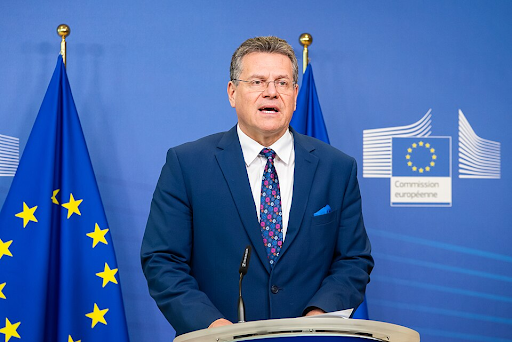
Trade tension is mounting between the EU and the US as both sides seek a last-minute tariff solution to avoid President Donald Trump’s threatened 50% tariffs on all EU exports. Reports indicate a high-level “framework” deal is close, with the EU willing to accept 10% blanket tariffs in exchange for an extension of talks and potential concessions on the 25% car tariff, a significant concern for German industry. The critical deadline is next Wednesday.
A glimmer of optimism was expressed by US Treasury Secretary Scott Bessent after his Thursday meeting with EU Trade Chief Maroš Šefčovič. Bessent’s comments about seeing “a lot more trade deals” reflected the ongoing efforts. The intensity of these high-level discussions will continue with US Commerce Secretary Howard Lutnick and US Trade Representative Jamieson Greer, with expectations for “diligent” work throughout the weekend.
The urgency stems from President Donald Trump’s ultimatum: 50% tariffs on all EU goods by July 9th unless a deal is struck. This would be a significant escalation from current tariffs, which include 10% on most EU products and 25% on cars. German Chancellor Friedrich Merz has championed a swift, “UK-style” agreement in principle, emphasizing the need for quick resolution of the tariff dispute to alleviate burdens on businesses.
A crucial component for the EU is a “standstill clause,” ensuring no new tariffs during an extended negotiation period. While hopes are high for a deal by Friday, offering a timely announcement for Trump, the complexities are considerable. Reports indicate a past “massive tome” of US grievances and a lack of detail on US concessions in their latest proposal, particularly on sensitive EU “red lines” like pharmaceuticals, semiconductors, energy, and regulatory non-trade barriers.