
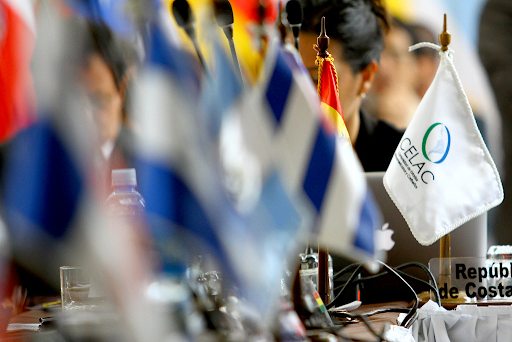
The political debate over a deadly US military operation has become a personal tragedy for Colombia, the host nation of the EU-CELAC summit. President Gustavo Petro has grounded his fierce condemnations in concrete national loss, identifying at least one Colombian citizen among the 60-plus people killed in the strikes. Furthermore, one of only two known survivors from the multiple attacks is also Colombian, bringing the crisis home to Santa Marta in a stark and personal way.
This human element has given Petro the moral and political authority to label the deaths “extrajudicial executions.” It transforms his critique from a simple policy disagreement into a demand for justice for his citizens. This national grievance has now been placed at the very center of a summit that was supposed to be about strengthening ties with the European Union.
The summit is already on shaky ground due to the absence of key European leaders, including European Commission President Ursula von der Leyen. While Spanish Prime Minister Pedro Sánchez is in attendance, the low turnout has weakened the European side of the talks. Colombia’s Foreign Ministry has attributed the absences to “scheduling conflicts” with a UN climate summit.
Into this volatile mix comes Brazilian President Luiz Inácio Lula da Silva, whose surprise attendance is a boost for the Latin American bloc. Lula’s agenda, however, is similarly focused on regional security. His delegation is highlighting the need for “regional solidarity with Venezuela” against US military threats, a topic that resonates strongly with Petro’s own complaints.
As a result, the official agenda, focused on a “Declaration of Santa Marta” for cooperation on green energy and food security, is being completely sidelined. The confirmed Colombian victims have given a face to the tragedy, ensuring that the summit’s primary discussions will be about the human cost of the US military’s actions in the region.