
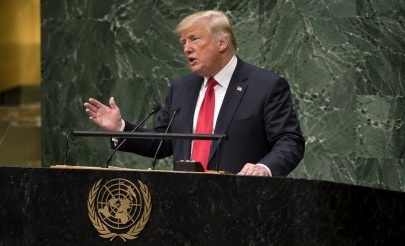
President Donald Trump has proposed that the United States government adopt the term “super intelligence” in place of “artificial intelligence,” arguing that the current terminology understates the technology’s capabilities. Speaking at the United Nations General Assembly in New York, Trump emphasized that this rebranding effort would be reflected in future government documents.
The President also addressed the ongoing international discourse on AI regulation, dismissing calls for global oversight as exaggerated. Trump stated that the U.S. would not participate in establishing a worldwide framework to control AI, asserting that the technology’s economic impact could surpass previous technological revolutions.
This stance comes amid increasing global discussions on managing advanced AI systems, with more than 20 political leaders advocating for enhanced international cooperation and safety standards. Despite these calls, Trump maintained that AI development should continue unimpeded.
In addition to renaming AI, Trump suggested the creation of an “AI Force” and the appointment of an AI czar to oversee the technology domestically. However, the administration has yet to provide detailed plans on how this proposed structure would function.
The term “superintelligence” already holds specific significance in AI research, typically describing a hypothetical system that significantly surpasses human intelligence across various tasks. Trump’s broader application of the term aims to reshape the perception of AI’s potential capabilities.