
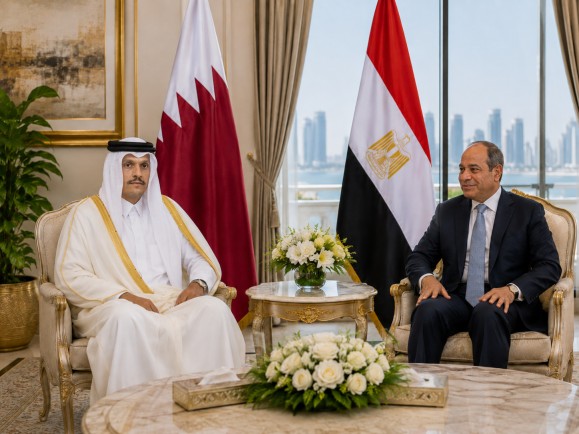
Qatar and Egypt have expressed their intent to deepen their diplomatic and economic ties, focusing on enhancing cooperation in key sectors such as economics, investment, and labor. This commitment was underscored during a meeting between Qatar’s Prime Minister and Foreign Minister Sheikh Mohammed bin Abdulrahman bin Jassim Al Thani and Egypt’s Foreign Minister, Immigration and Egyptian Expatriates Dr. Badr Abdelatty. The meeting took place in Cairo alongside the seventh session of the Qatari-Egyptian Joint Higher Committee.
The discussions highlighted significant growth in economic exchanges between the two nations, with trade surging by 80 percent by 2025. This robust economic relationship is further evidenced by the expansion of Qatari investments in Egypt, notably a sustainable aviation fuel production project within the Suez Canal Economic Zone. Both countries acknowledged the positive trajectory of their economic partnership and expressed eagerness to sustain this momentum.
In addition to economic ties, the dialogue also covered other critical areas such as labor and consular cooperation. Both parties explored ways to enhance collaboration on these fronts, reflecting a comprehensive approach to strengthening bilateral relations. Moreover, they addressed regional developments, emphasizing the need to reduce tensions and bolster stability. The officials reiterated their commitment to pursuing diplomatic solutions to regional conflicts, particularly concerning Gaza.
Maritime security and freedom of navigation were also key topics of discussion, with both nations underlining their importance for protecting international trade and ensuring regional stability. The Arabian Gulf and Red Sea are crucial maritime routes, and Qatar and Egypt stressed the need for continued cooperation to safeguard these areas.
The meeting underscores the ongoing efforts by Qatar and Egypt to not only cement their bilateral relations but also to play a collaborative role in regional stability and economic development. By addressing both current challenges and future opportunities, the two countries are poised to enhance their strategic partnership in the years ahead.